
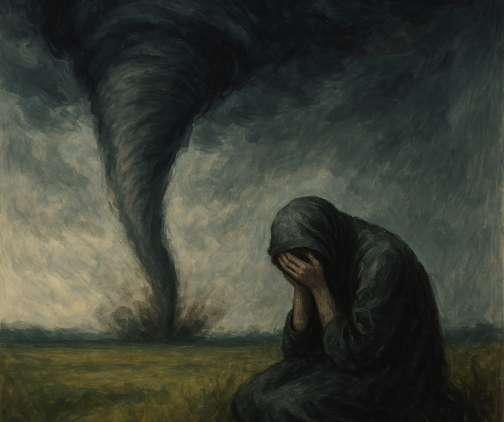
Life can change in an instant. One moment, the sky is clear and calm; the next, dark clouds gather, and the winds begin to howl. Before you know it, a storm has descended, bringing chaos and destruction. Tornadoes strike with a force that leaves behind broken homes, shattered lives, and a path of devastation that takes months—sometimes years—to recover from.
Grief is much the same. The loss of a loved one can hit just as suddenly and powerfully. Even if you know the loss is coming, the impact still knocks you off your feet. The emotional destruction is just as real as the physical wreckage left by a tornado. Both are powerful, unpredictable, and life-altering. And just as a tornado forever changes the landscape of a town, grief changes the landscape of the heart.
For those who have experienced deep loss, the parallels between a storm and grief are unmistakable. Both leave you searching for shelter, struggling to rebuild, and wondering if life will ever feel normal again. But as with a storm, there is hope. In time, healing happens—not by erasing what was lost but by finding new ways to live and grow despite the devastation.
The Sudden Impact: The Moment Everything Changes
A tornado can strike with little to no warning. Even with modern technology, storm trackers may only provide a few minutes’ notice before the winds arrive. The world can go from peaceful to perilous in the blink of an eye.
Loss often comes the same way. Whether sudden or expected, it never truly prepares you for the moment when your loved one is gone. Even when a long illness foreshadows the inevitable, the finality of loss still feels like a punch to the gut. One day, your world is intact; the next, it’s shattered.
The first moments after loss feel surreal, like standing in the eye of a storm. There’s a strange stillness, a sense that time has stopped. You may feel numb, unable to comprehend the enormity of what has happened. Just as a tornado survivor might step outside to see their neighborhood in ruins, grief leaves you standing in the wreckage of the life you once knew.
Some people respond to the impact by going into survival mode—doing what must be done, making funeral arrangements, comforting others. Others collapse under the weight of sorrow, feeling paralyzed by the enormity of the loss. There’s no right or wrong way to respond, just as there’s no single way to react to a natural disaster. But no matter how you experience it, one thing is certain: nothing will ever be the same again.
The Aftermath: Picking Up the Pieces
In the days, weeks, and months following a tornado, the destruction becomes fully visible. Broken homes, uprooted trees, and shattered lives create a landscape of loss. The hardest part is knowing where to begin.
Grief works the same way. In the immediate aftermath of loss, you may feel disoriented, like you’re standing in the middle of emotional rubble. Everything that once felt stable is now in question. Relationships shift, routines are disrupted, and even your sense of self may feel shaken.
For tornado survivors, recovery begins with small steps. They salvage what they can, lean on each other for support, and slowly start the rebuilding process. In grief, the process is similar. At first, you may only have the strength to get through one moment at a time. Simple tasks—getting out of bed, eating a meal, making a phone call—can feel overwhelming.
Just as a tornado leaves behind visible reminders of its presence, grief lingers in everyday life. A favorite chair, a familiar scent, a birthday on the calendar—each one becomes a painful reminder of what’s missing. The empty spaces left behind are not just physical but emotional.
But just as survivors of a storm gradually begin to rebuild, so too do those who grieve. Slowly, they learn to carry their loss in a way that allows them to move forward without forgetting what was lost.
Unpredictable Waves of Emotion
Even after a tornado has passed, its effects remain. The wind may have died down, but the damage is still there. Rain seeps through broken roofs, aftershocks of destruction linger, and survivors remain on edge.
Grief is equally unpredictable. Just when you think you’re making progress, an unexpected reminder can send you spiraling back into sorrow. A song on the radio, a familiar scent, a holiday—all can trigger a wave of emotion that feels as fresh as the day of the loss.
In some cases, grief can feel even harder to navigate than a natural disaster because its timeline is unknown. A town hit by a tornado can eventually measure progress—debris is cleared, homes are rebuilt. But grief doesn’t follow a neat timeline. Some days, you may feel fine; other days, the pain returns as if no time has passed at all.
It’s important to remember that just as weather patterns shift, so does grief. There will be calm days and stormy ones, moments of peace and sudden downpours of emotion. Healing doesn’t mean forgetting—it means learning to ride out the waves, knowing that the storm won’t last forever.
Finding Shelter: The Importance of Support
In a tornado, seeking shelter is essential for survival. Those who take cover in basements or sturdy structures are more likely to make it through the storm unharmed.
Grief requires the same kind of protection. No one should have to weather the storm of loss alone. We at the Motherless Daughters Ministry, will always walk with you. Finding shelter—whether in faith, family, friends, or a support group—can make the difference between feeling completely lost and finding a path forward.
Unfortunately, many grieving individuals feel pressure to “be strong” or “move on” before they’re ready. Society often expects people to grieve quickly and quietly, much like how communities rush to clean up after a disaster. But true healing takes time. Having a support system that acknowledges and respects that time is crucial.
Just as communities come together to help each other after a tornado, those who grieve need compassionate people who will sit with them in their sorrow. Sometimes, the best support doesn’t come in words but in presence—just knowing someone is there can provide comfort in the darkest moments.
Rebuilding with Hope
After a tornado, survivors don’t simply rebuild what was lost; they create something new. Though the landscape is forever changed, new homes rise, trees are replanted, and life begins again.
The same is true for those who grieve. Life after loss is not about returning to what was—it’s about learning to live in a new way, carrying the love and memories forward.
This doesn’t mean the pain disappears. Just as scars remain after a storm, grief leaves permanent marks on the heart. But over time, the wounds become part of the story rather than the entire story.
Grief transforms us. It deepens our understanding of love, strengthens our ability to empathize, and reminds us of the resilience of the human spirit. Like a town rebuilt after a storm, we find new ways to grow, not despite the loss, but because of it.
Finding Meaning in the Storm
No one would ever wish for a tornado to strike. No one asks for grief. Yet, in both, there is an opportunity—not to erase the past but to honor it.
For some, rebuilding means finding ways to carry on their loved one’s legacy—whether through acts of kindness, shared traditions, or simply holding their memory close. Others find solace in helping those who are also grieving, offering support just as they once received it.
The storm may have changed the landscape, but it does not erase the beauty that was once there. In time, life grows again—even in the places where the winds once howled the loudest. If you are grieving, know this: The storm will pass. The sun will shine again. And though your heart may always carry the marks of loss, it will also carry the love that remains.