
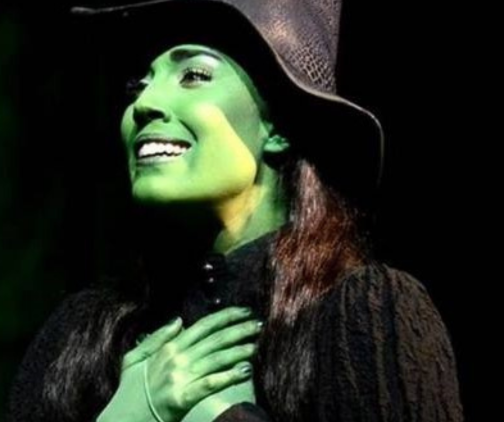
As an avid musical theater fan, I have loved the musical Wicked since I first saw it almost 20 years ago. The story follows Elphaba (who would later become the Wicked Witch of the West) and Glinda’s friendship years before Dorothy came to Oz. From the first song I heard from the musical, I felt such a connection to the story. I recognize there are important parts of Elphaba’s journey that I cannot personally relate to, particularly the discrimination she faces due to the color of her skin. I would never want to claim that experience as my own or downplay its significance. But other parts of her experience resonated with me in powerful way.
Last year, the movie adaptation of the musical came out. I had not seen the show in 9 years, which means I had not seen the show since my mom died. The last time I saw the show was actually with my mom. There were parts of Elphaba’s story that hit me in new ways. The biggest for me was noticing (for the first time) that Elphaba is a motherless daughter. In the story, her mother died during childbirth with Elphaba’s younger sister, Nessarose. Elphaba blames herself because it was caused by something her mother took to try and ensure her second child was not also born green.
There’s an incredibly poignant scene that I barely even noticed before where she discusses her mother’s death. Elphaba and Glinda are each sharing secrets they’ve never told anyone else. Elphaba cautiously tells Glinda about her mother’s death and how she blames herself; you can see the shame and pain as she recounts the details. Glinda replies, “That may be your secret, Elphaba, but that doesn’t make it true.” It’s a quick scene between big songs, and honestly, I did not even remember it from the stage show. But I was struck this time by the power in Glinda’s statement.
How many of us motherless daughters can relate to how Elphaba feels? We each have unique stories of mother loss through abandonment, death, narcissism, or emotional absence. We might not all specifically blame ourselves in the same way Elphaba did for her death/absence, but so many motherless daughters carry shame or blame in some way. Often it is something unspoken, but something that we carry with us.
For me, my mother died from a cardiac episode a few months after my first child was born. It was a very complicated pregnancy with a lot of fear and uncertainty. I have carried so much guilt that perhaps I contributed to the stress in her life as I relied on her emotionally during this difficult season. I was understandably so focused on myself and my baby, perhaps I wasn’t as attuned to what she was dealing with. While the reality is there’s no evidence that it contributed to any of her issues, there were dark moments when it felt so real to me. But that doesn’t make it true.
Another part of the movie that hit me was the powerful Act 1 finale song, “Defying Gravity”. I don’t want to reveal too much, but Elphaba is at a point where she’s backed into a corner – alone and realizing what she put her hope in was not true. It is a pivotal point where she’s emboldened with a new purpose and strength. Tears streamed down my face as I watched Elphaba tap into her strength despite her increasingly difficult situation. I connected with her at that moment in a way I never could previously when I saw the stage show. As a motherless daughter and daughter going through an estrangement with her father, I felt this on another level.
I am not the same person I was 9 years prior when I saw the show last. The past few years have rearranged my faith, and I have lost so much. In some ways, my faith has gotten much deeper, but it’s still been an adjustment to reevaluate and deconstruct harmful theology around loss, forgiveness, family, and mental health. And not everyone is okay with those changes or boundaries I’ve had to learn to put in place. It has been a painful and lonely journey at times.
As I said, I know Elphaba’s story includes parts I will never fully understand or relate to. But, watching it this time, I truly felt moved by how much I could relate to her loneliness, pain, and the change happening within her. But, just like she discovered in herself, I know I have strength that has helped me “defy gravity” in my own life. Strength from my faith and community, I’ve found with other motherless daughters. Just like Elphaba sings about in “For Good”, I know I have also had people come into my life that has changed me for the better.
Motherless Daughters Ministry has been a big part of that for me. I’ve met women that I’ve learned from, been encouraged by, and experienced community with. Women who have helped me grow in my faith. It is comforting to know that no matter what I lose, I truly do not have to go through this journey alone.