
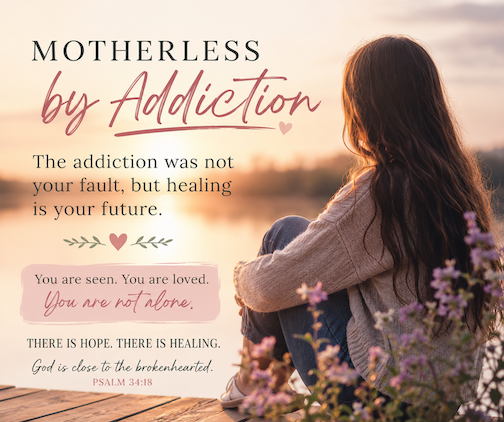
There is a unique kind of grief that often goes unnamed. It is the grief of having a mother who is physically alive but emotionally unavailable because addiction has stolen her presence.
For many motherless daughters, the loss did not come through death. Instead, it came through alcohol, drugs, prescription medications, gambling, or other addictions that slowly eroded trust, connection, and safety. Addiction became the third person in the relationship, demanding all of your mother’s attention while leaving little of her heart available for you.
As a child, you may have wondered, “Why doesn’t she choose me?” You may have believed that if you behaved better, achieved more, or caused fewer problems, your mother would finally see you. You spent years chasing moments of affection that seemed just out of reach.
The painful truth is that addiction changes people. It distorts priorities, clouds judgment, and often makes promises impossible to keep. While addiction may explain your mother’s behavior, it does not erase the wounds it left behind.
Being motherless by addiction often means growing up with uncertainty.
- Some days your mother may have been loving and attentive.
- Other days she may have disappeared emotionally or physically.
- Birthdays were forgotten.
- School events were missed.
- Holidays felt unpredictable.
- You learned to read the room before you entered it, wondering which version of your mother would greet you.
This inconsistency teaches children survival rather than security.
Many daughters become caretakers long before they should. They prepare meals, care for younger siblings, make excuses for their mother’s behavior, or carry family secrets to protect everyone else. Childhood becomes a responsibility instead of a season of discovery.
As adults, these daughters often continue carrying burdens that were never theirs to bear.
- They become highly responsible, fiercely independent, and reluctant to trust others.
- Asking for help feels uncomfortable because they learned early that depending on someone often led to disappointment.
- Others struggle with perfectionism, believing they must earn love through performance.
- Some become people-pleasers, always scanning the needs of others while ignoring their own.
- Others build walls around their hearts, convinced that vulnerability is simply too dangerous.
These responses are understandable. They were developed to survive.
Yet survival is not the same as healing.
Healing begins when we give ourselves permission to acknowledge what was lost. It is okay to grieve the mother you needed but did not have. It is okay to mourn the conversations that never happened, the hugs that never came, and the guidance you desperately longed for.
Grief does not require that your mother has died. It simply recognizes that something precious was missing.
One of the greatest gifts you can give yourself is releasing responsibility for your mother’s addiction. Children naturally assume they caused family problems. But addiction existed long before you had the power to change it, and it continues because of forces far greater than your ability to fix them.
- You were never responsible for rescuing your mother.
- You were never responsible for healing her.
- You were never responsible for carrying the shame of her addiction.
Those burdens belong where they have always belonged—not on your shoulders.
- God sees the little girl who waited by the window, hoping her mother would come home sober.
- He sees the teenager who stopped inviting friends over because she feared embarrassment.
- He sees the adult daughter who still wonders why she wasn’t enough.
God specializes in restoring what addiction has attempted to steal. He becomes a faithful Father to those who lacked security. He surrounds us with spiritual mothers, trusted friends, mentors, and healthy community who demonstrate the nurturing love we have long desired.
Healing does not mean pretending the past did not happen. Healing means allowing God to enter the painful places and gently rewrite the story your wounds have been telling you.
- Instead of believing, “I wasn’t worth loving,” you begin to hear, “You have always been deeply loved.”
- Instead of believing, “I must earn acceptance,” you discover that God’s love is freely given.
- Instead of believing, “I am alone,” you find yourself embraced by a community that understands your story.
If your mother is still living and struggling with addiction, healing may also include establishing healthy boundaries. Loving someone does not require enabling destructive behavior. Boundaries are not punishment—they are protection. They create space for honesty, wisdom, and emotional health while allowing you to love without losing yourself.
Perhaps today you recognize your own story in these words.
If so, know this: your mother’s addiction does not define your identity.
- You are not damaged beyond repair.
- You are not destined to repeat the same story.
- You are not forgotten.
- You are a beloved daughter of God, worthy of love, safety, and belonging.
At Motherless Daughters Ministry, we believe no woman should walk this journey alone. There is hope beyond the pain. There is healing beyond the memories. There is life beyond survival. Join us in Oct. for our Connections & Conversations Circle for women who have experienced mother loss by addiction.
Your story did not end with addiction.